Back to articles
Civic Stories Published: December 15, 2024

Izmir's traffic risk: what crash and breakdown records reveal

An investigation of more than 17,000 traffic incident records in Izmir, showing where risk concentrates by corridor, incident type, day, and hour.

Izmir Traffic Center records Time-density modeling React scrollytelling graphics Astro editorial flow
Izmir's traffic risk: what crash and breakdown records reveal

Story Snapshot

Start with the graphic

This investigation turns more than 17,000 traffic incident records from Izmir into a guided visual story about which streets, incident types, days, and hours carry the highest risk.

17K+ Records analyzed
2+ years Time span
3 Interactive views

Izmir’s traffic risk is patterned, not random. The sequence below starts with fragile corridors, then narrows into incident types and the weekly hours where pressure tightens.

Step 1

The ranking race between corridors

The first view follows street rankings instead of treating each year as a separate static chart, making persistent risk easier to see.

Corridor pressure

Where risk persists across major streets

This ranking flow shows which corridors stay near the top and which climbed in the latest period.

A line moving upward means a street is becoming more prominent in the crash ranking.

Use the top-eight list to change focus; the line chart stays responsive on mobile.

2024 focusYeşildere Caddesi611 records
#1#2#3#4#5#6#7#8#9#102021202220232024
Focus corridorYeşildere Caddesi
Rank movement#1 → #1
2024 records611

2024 top eight

Hovering gives a quick preview, and clicking locks the corridor. A downward line means the corridor is moving toward a higher-risk rank.

Step 2

Dominant incident categories

The second step simplifies the long incident list so the categories driving the record become visible.

Incident categories

Which incident types carry the total pressure?

The selected year foregrounds the categories that actually drive the record. The goal is not to enlarge every category at once, but to make the dominant incident types visible quickly.

The dominant categories carry the story; the Top-N toggle keeps the long tail available without overwhelming the first read.

Choose a year first, then expand the visible category count only when you need the long tail.

20244,029Property damage leads
01

Property damage

1,938
02

Breakdown

1,482
03

Injury crash

436
04

Multi-vehicle crash

163
05

Fatal

9
06

Fire

1
07

Legal case

0
08

Asphalt work

0
09

Heavy vehicle

0
10

Over-height vehicle

0
Selected year2024
Total records4,029
Dominant categoryProperty damage

The Top-N view does not erase the long tail; it simply brings the main pressure into the first read.

The opening view emphasizes editorial priority; readers who need detail can open more categories to inspect the long tail.

Step 3

Density by day and hour

The final view adds marginal totals and comparison mode to show exactly when the weekly rhythm tightens.

Daily rhythm

When does weekly risk tighten?

The heatmap shows the weekly rhythm, while day/hour selectors keep the exact read accessible without hundreds of cell buttons.

Look for darker weekday commute blocks first, then switch to difference mode to spot timing shifts.

Use year, mode, day, and hour controls for keyboard reading; the heatmap cells are visual marks.

Friday 17:00942024 incidents
00
01
02
03
04
05
06
07
08
09
10
11
12
13
14
15
16
17
18
19
20
21
22
23
Mon
Tue
Wed
Thu
Fri
Sat
Sun
Mon
Tue
Wed
Thu
Fri
Sat
Sun
Active read2024
Selected cellFriday, 17:00

94 incidents

Color scale

LowHigh
Marginal bars show how density accumulates not only in individual cells, but also across day and hour totals. Difference mode makes timing shifts visible at a glance.

What to notice

  • The street-ranking view shows that some corridors are not only busy, but structurally fragile. Streets that stay high every year deserve special monitoring for response planning and prevention.
  • The incident-type view shows that a few categories carry most of the record, while the long tail remains secondary.
  • The day-hour matrix exposes commute rhythm and lets year-to-year timing shifts appear without adding another chart.

Data source: Izmir Metropolitan Municipality Open Data Portal
Related Work

Selected adjacent work that extends the same problem space from a different angle.

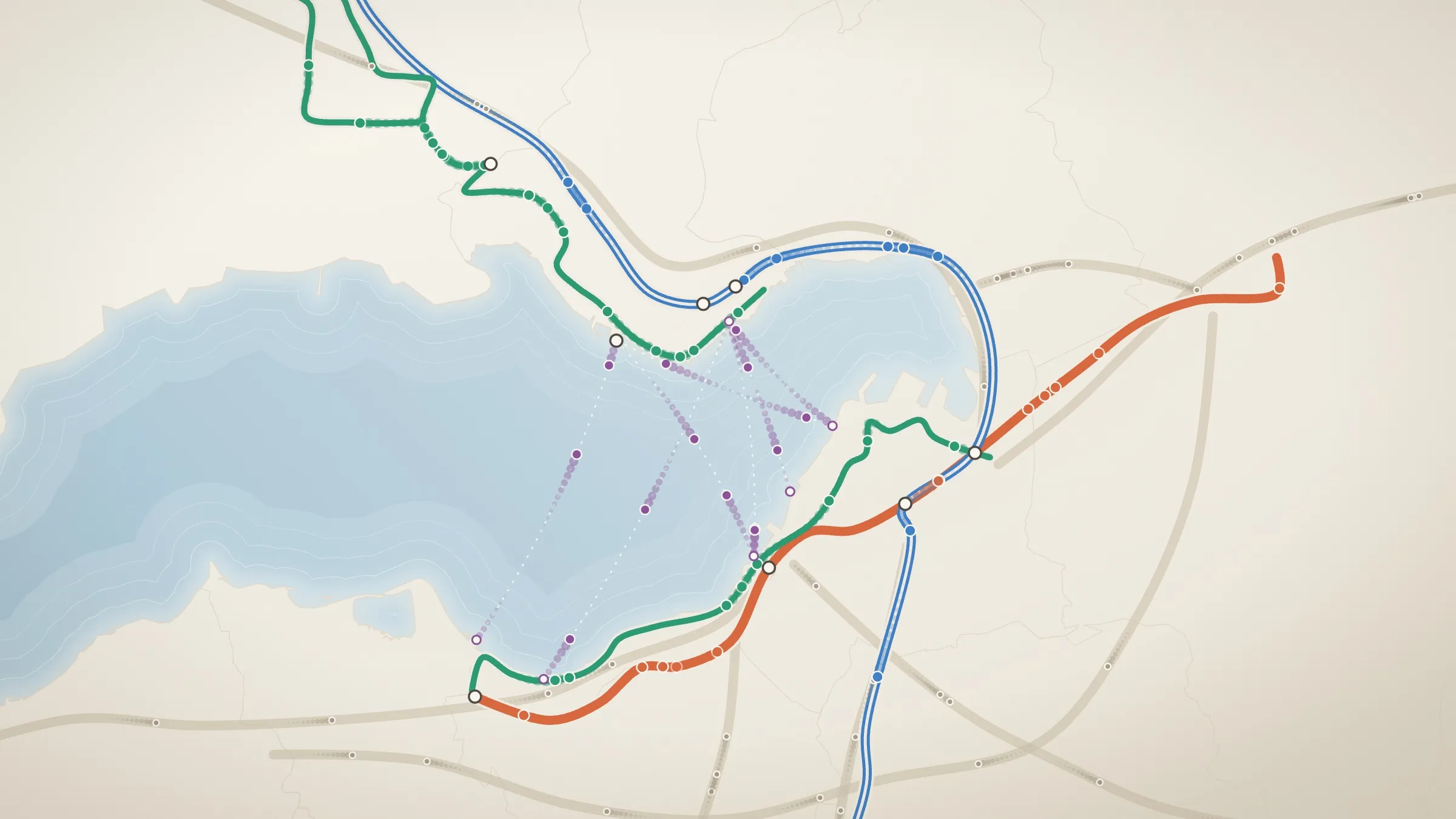
How Izmir's transit network found its way back after the pandemic
Systems Modeling

Article in English

Mar 25, 2024

How Izmir's transit network found its way back after the pandemic

A systems-focused analysis of Izmir's transit recovery that uses open data to show both ridership rebound and demographic shifts.

Role: Data analysis, systems framing, interaction design

Impact: Makes a large public dataset usable for readers trying to understand how an urban system changed after disruption.

Municipal ridership records Monthly recovery modeling Linked React chart system Astro reporting flow
Parliament Analysis
Political Analysis

Project case study

Jun 15, 2024

Parliament Analysis

Interactive reporting project analyzing parliamentary proposals, voting patterns, and party behavior in Turkey.

Role: Data analysis, story framing, interactive frontend implementation

Impact: Turns institutional parliamentary data into a public-interest interface people can explore directly.

D3.js React Python Pandas